The Innovative Motiva Ergonomics Breast implant Technique that Eliminates Animation Deformity and Reduces Capsular Contracture Risk
March 26, 2026
Introduction to Motiva Breast Augmentation Innovation
Breast augmentation has long been a popular cosmetic procedure, with techniques evolving to enhance safety, aesthetics, and patient satisfaction. Traditionally, the dual plane method—placing implants partially under the pectoralis major muscle—has been the gold standard, especially in the United States. However, this method can cause animation deformity, where breast shape changes during muscle flexing, leading to unnatural movement and discomfort.
Recently, a groundbreaking approach incorporated by Dr. David Rapaport in Manhattan, located on Park Avenue, using the Motiva ergonomics implant over the muscle has emerged, challenging conventional practices and offering new benefits. This blog post explores this innovative procedure, its advantages, and its impact on breast augmentation outcomes.
Understanding Traditional Breast Augmentation Techniques
The Dual Plane Approach Explained
Historically, the dual plane technique involves partially inserting the breast implant beneath the pectoralis major muscle. Specifically, surgeons cut the bottom of the muscle, allowing the implant to sit covered by the upper portion of the muscle while the lower part remains free. This method provides several benefits:
- The muscle acts as a buffer, softening the implant’s appearance.
- Reduced implant hardness.
- Improved overall breast shape.
Despite these advantages, the dual plane technique has a significant downside: animation deformity.
What Is Animation Deformity?
Animation deformity occurs when the pectoralis muscle contracts during activities like pushing, lifting, or dancing, causing the breast implant to move or distort visibly. This effect can be mild or severe, but often it is cosmetically undesirable and can impact patient confidence.
The Problem with Going Under the Muscle
Muscle Alteration and Its Consequences
Performing dual plane augmentation requires cutting or separating the pectoralis major muscle. This separation leads to permanent alteration:
- The muscle retracts and never fully reunites.
- Potential weakening of muscle function.
- Possible discomfort or unnatural sensations during muscle use.
While patients retain other muscles for activities like push-ups, the alteration remains significant and irreversible.
Introducing the Motiva Ergonomics Implant
Key Features of the Motiva Implant
The Motiva ergonomics implant represents a significant shift in breast augmentation practices. Unlike traditional implants, it offers:
- A uniquely designed nano-textured surface with approximately a 4-micron variability.
- A smooth feel combined with a surface that discourages capsular contracture formation.
- Reduced incidence of post-surgical complications.
Capsular Contracture: The Biggest Challenge
Capsular contracture is the formation of tight scar tissue around the implant, causing hardness, discomfort, and sometimes distortion. Statistically, it affects about 12% of patients undergoing breast augmentation worldwide.
Motiva implants have demonstrated a notable reduction in this risk due to their innovative surface texture, which discourages the cellular activity responsible for scar tissue formation.
Benefits of Placing Motiva Implants Over the Muscle
Eliminating Animation Deformity
By positioning the implant over the pectoralis muscle, the problematic animation deformity is essentially eliminated. Since the muscle is left intact, flexing does not displace or distort the implant.
Preserving Muscle Integrity
This technique avoids cutting or damaging the muscle, preserving its natural function and structure.
Cosmetic and Practical Advantages
- More natural breast movement is aligned with body mechanics.
- Less postoperative discomfort related to muscle trauma.
- Faster recovery due to less invasive muscle manipulation.
Patient Considerations and Suitability
Ideal Candidates for Over-the-Muscle Placement
The procedure is especially suitable for patients with:
- Adequate body fat and breast tissue to cover the implant and avoid visible rippling.
- A preference to avoid animation deformity or muscle alteration.
Managing Concerns About Rippling
For leaner patients who may be prone to implant rippling when placed over the muscle, several options exist:
- Fat grafting via liposuction from other body areas to add soft tissue coverage.
- Utilizing cadaver-derived fat transfers as an alternative.
- Customized implant sizing and placement techniques.
These options ensure that even slimmer patients can benefit from the over-the-muscle technique with minimal aesthetic compromise.
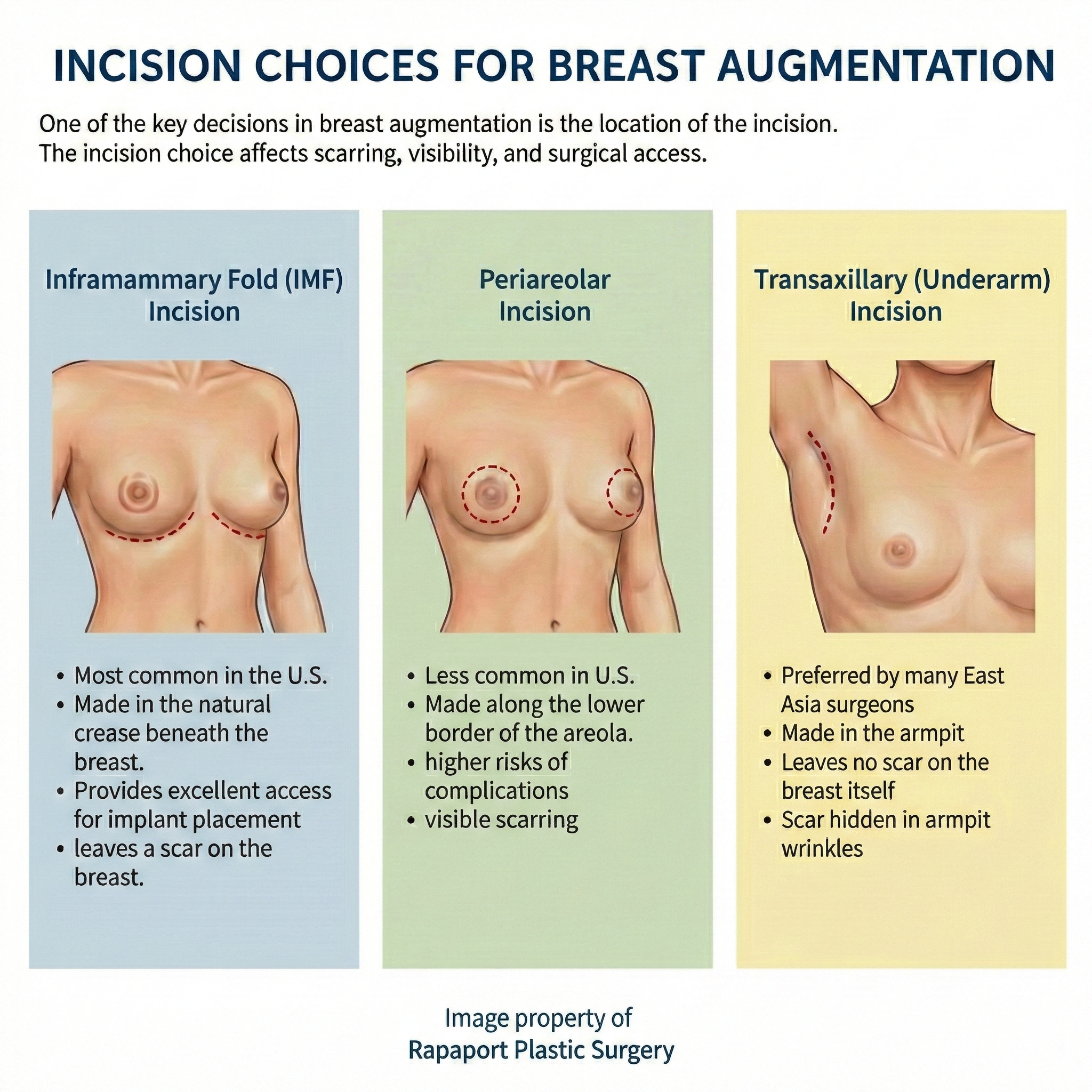
Surgical Approaches and Incision Options
Inframammary (Under Breast) Incision
The most common and straightforward technique involves an incision beneath the breast fold, allowing direct access for implant placement.
Transaxillary (Underarm) Incision
This alternative approach involves placing the implant through an incision in the underarm, offering a scarless appearance on the breast itself. Dr. David Rapaport prefers this method as it results in scarless breasts.
Upcoming Techniques
Emerging minimally invasive methods utilizing scopes and specialized instruments promise even less scarring and faster recovery, though some are not yet widely available in the United States.
The Future of Breast Augmentation with Motiva Implants
Shifting Paradigms in Surgical Practice
The adoption of Motiva implants over the muscle marks a historic moment in breast augmentation. As more surgeons embrace this technique, patients can expect:
- Improved aesthetic outcomes.
- Reduced incidence of common complications.
- Enhanced long-term satisfaction.
Continuous Innovation and Patient Education
Patients are encouraged to learn about all available options and discuss candidacy thoroughly with their surgeons. Advances such as fat grafting and novel surgical techniques will further personalize breast augmentation outcomes.
Conclusion: Why Motiva Over-the-Muscle Is a Game Changer
Motiva ergonomics implants combined with the over-the-muscle placement technique represent a revolutionary step forward in breast augmentation. By addressing longstanding issues like animation deformity and capsular contracture, this approach prioritizes natural aesthetics, patient safety, and comfort.
For those considering breast augmentation, understanding these advancements can empower informed decisions that align with individual goals and body types.