


Facelift in NYC
Board-certified plastic surgeon David P. Rapaport, MD, is one of Manhattan’s most sought-after facelift surgeons. His nuanced, skillful approach creates unrivaled results that appear spontaneously beautiful and natural.
Facelifts have become increasingly popular in recent years to rejuvenate and enhance one’s appearance. With Dr. Rapaport’s advanced surgical techniques, a facelift can help reduce the signs of aging, such as sagging skin and jowls. The results of a facelift can be truly transformative, restoring a patient’s confidence and enhancing their overall appearance.
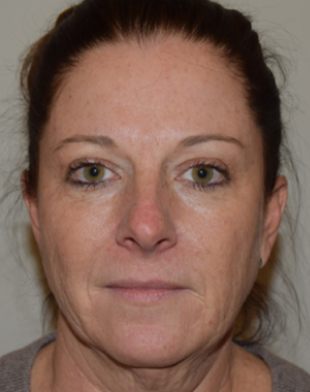
BEFORE
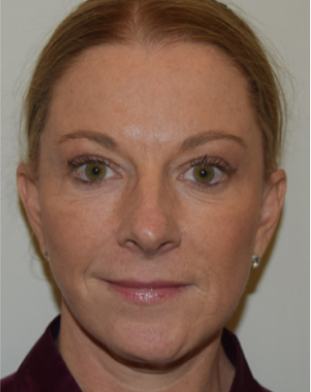
AFTER
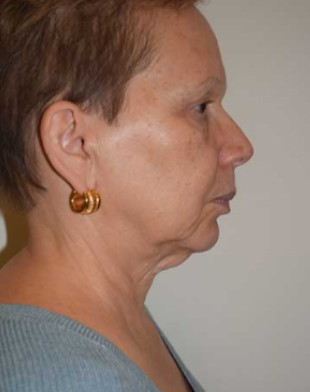
BEFORE
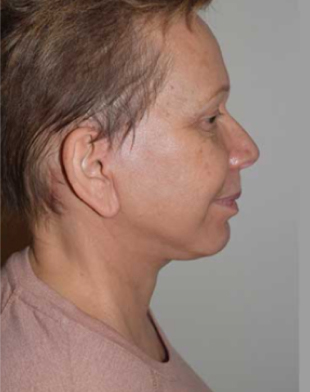
AFTER
BEFORE
AFTER
BEFORE
AFTER
*Individual results may vary.
A Pioneer In Plastic Surgery
Why Choose Dr. Rapaport for Facelift in NYC?
Dr. David Rapaport’s high degree of skill and deep knowledge of facial anatomy make him one of the top facelift surgeons in NYC. A facial-rejuvenation specialist with over 30 years’ experience, Dr. Rapaport understands the best and safest ways to restore patients’ youthful looks.
Dr. Rapaport is a double-board-certified plastic surgeon and has been honored as a Castle Connolly Top Doctor since 2016. Along with serving as a member of the American Society of Plastic and Reconstructive Surgeons, he has delivered presentations at medical conferences and authored several medical journal articles.
Dr. Rapaport’s years of training helped him become the best facelift surgeon in New York City. He studied medicine at Boston University and Tel Aviv University, and he completed residencies at Harvard’s Beth Israel Hospital and New York University Medical Center.
Our Accreditations












Learn More About Facelift
The best candidate for a facelift is a woman or man whose face and neck demonstrate skin laxity (sagging), especially of the lower face and neck. Most facelift patients are in their 40s-60s, but facelifts can be performed successfully on people in their 70s-80s as well if they are in good health. In select cases, Dr. Rapaport will perform a facelift on women under 40 if they have experienced significant facial aging, particularly due to sun exposure.
You may encounter various names for different types of facelifts, such as “mini facelifts” or “lower facelifts.” Dr. Rapaport regards these names to be more marketing and sales maneuvers than meaningful descriptions. He considers the terms facelift, lower facelift, and neck lift to be the same operation.
The term “mini facelift” can be very misleading. According to Dr. Rapaport, there really should be no such thing as a true mini facelift. Once the surgeon opens the face to rejuvenate it, he should perform every safe and reasonable maneuver to achieve optimal results.
A short scar facelift is a distinct type of facelift in which the scar does not extend far behind the ear and into the hairline or scalp. Nonetheless, the operation remains the same internally, meaning it is still not a “mini” facelift.
The phrase “Lifestyle Lift” is specifically used by a company for marketing purposes and typically refers to a facelift performed under local anesthesia. While Dr. Rapaport prefers IV sedation over general anesthesia, he emphasizes that some form of monitored sedation is vital for a safe and optimal facelift procedure. When a facelift is performed solely under local anesthesia, the surgeon is under pressure to work quickly so the patient does not become uncomfortable. Having a surgeon rush through the facelift procedure is not in the patient’s best interest.
Midface lifts generally refer to facelifts performed via the lower eyelid to lift the soft tissues upward. These types of lifts are more commonly performed in the south than in the northeast because they generally involve significantly more facial swelling and a prolonged recovery period. There also can be more issues with asymmetry using this technique. For these reasons, Dr. Rapaport does not perform facelifts via the lower eyelid approach.
A facelift addresses the core problems that result from significant facial aging. While injectables can provide dramatic solutions for volume loss of the midface (areas around the cheeks and eyes), injectable fillers have a fairly limited role in addressing the jowls and neck. When the neck demonstrates significant crepe-like skin and vertical bands or folds of skin (we call these platysmal bands or neck bands), there is very little that fillers or Botox® can do.
Patients with these problems are ideal candidates for a facelift. Liposuction and reducing and contouring neck fat are intrinsic parts of the facelift procedure to create a natural and rejuvenated appearance. Many patients have other facial rejuvenation procedures, such as an eyelid lift or brow lift, performed simultaneously.
Anesthesia
Unlike many plastic surgeons who perform their facelifts under general anesthesia with the patient completely unconscious, Dr. Rapaport strongly prefers “twilight” anesthesia, also known as IV sedation. With this form of anesthesia, the patient is breathing independently and responds to verbal commands (such as a request to take a deep breath) but typically has no memory of the procedure. Dr. Rapaport considers twilight anesthesia safer than general anesthesia, with a smoother, faster recovery. Anesthesia is administered by Dr. Rapaport’s board-certified anesthesiologist, Dr. John Grillo (or one of his associates).
Incisions
Because facelifting involves removing excess skin, they do require scars. Facelift scars can be well hidden around the patient’s ears and easily covered with a variety of hairstyles.
People sometimes talk about the facelift scar being either “in front of” or “behind” the ear. This is another example where terminology can be very misleading. All common facelift techniques involve a scar in front of the ear. The “in front of” or “behind” terminology refers to whether the scar is in front of or behind the tragus. Dr. Rapaport believes selecting the scar location to be in front of or behind the tragus is an individual choice. Many patients have a fine wrinkle immediately in front of the tragus, making the pre-tragal scar very appealing.
Perhaps more important is the fact that the tragus is truly a part of the ear; it contains cartilage like the ear and has a color and texture that match the ear much more than the cheek. When a scar is placed behind the tragus, the surgeon drapes skin from the cheek onto part of the ear, which can result in an unnatural appearance.
Dr. Rapaport sends his facelift patients home accompanied by a nurse hand-picked by our practice, who remains with the patient overnight. The morning after surgery, the nurse removes all bandages and any drains (if used) and forwards detailed photographs for the doctor to review. The presence of a nurse following facelift surgery is beneficial for the patient’s comfort as well as monitoring blood pressure and overall recovery.
After a facelift, many patients are surprised by the minimal pain they experience. Most patients return to work within two weeks. There will be swelling around the eyes for several weeks, but as this subsides, you’ll begin to see the progress of the surgery. You should avoid bending or lifting for three weeks after surgery as it can prolong swelling. Running, cycling, and other aerobic exercises can be resumed after three weeks. Driving is allowed once the swelling has gone down and does not impair your vision. Flying is generally permitted after ten days.
Risks & Complications
As with all surgery, there exists the possibility of complications. The most common complication following facelift surgery is hematoma. Hematoma refers to a collection of blood under the skin of the face or neck, which, depending on its size, may require intervention, such as drainage or re-operation. The literature reports the incidence of hematoma to be about 3% in female facelifts, higher in males because of the more vascular nature of men’s bearded skin.
The risk of this complication in Dr. Rapaport’s hands is significantly lower thanks to his careful technique and our insistence on nurse monitoring for the night after surgery. This keeps blood pressure under control. It is well established that increases in blood pressure heighten the risk of hematoma following a facelift. Therefore, having a trained nurse present for the highest risk period after surgery (90% of bleeding complications occur within 12 hours of surgery) will reduce the risk of this complication.
Facelifts do not stop aging, so as time goes by, the facelifted face will show signs of aging, such as jowls and loosening skin. For this reason, facelift results typically last 7-10 years. Many patients choose to have another facelift at this point.
Though facelift results may not be permanent, the person who has facelift surgery will always appear more youthful than they would if they hadn’t had the surgery, even years later. Dr. Rapaport’s favorite analogy is to imagine two identical twins needing a facelift, but only one has the surgery. The patient who had facelift surgery will always appear younger than her “identical” twin, even when she feels she is ready for another procedure.

Take the Next Step
Every patient’s transformation journey at Rapaport Plastic Surgery begins with a detailed consultation with Dr. Rapaport. To learn more about facelifts and determine if it’s the right choice for you, fill out the form below or call us at (212) 249-9955 to schedule an appointment. Our team is dedicated to providing the best plastic surgery NYC has to offer.
Ready to book a consultation or treatment? Just click the Book Now button below to schedule online.



